Renting camera gear instead of buying is the right call whenever you need a body, a specialty lens or a support item for a handful of days rather than every week of the year. The short version: rent anything you will use a few times a year or less, own the kit you reach for constantly, and run the numbers before either one.
I have rented before buying more times than I would admit to a rental house, and the pattern held every time. Somebody new to this usually asks about lenses, but bodies and lighting follow the same logic. The mechanics are simple enough that you can be renting well within an afternoon, provided you do the preparation first.
Prices quoted below are typical United States ranges gathered from published rental rate cards and forum threads. They move around, regional and seasonal, so treat them as a working spreadsheet rather than a promise.
Table of Contents
- What You Need
- How to Rent Camera Gear Instead of Buying: Step by Step
- Step 1: Define the gear and shoot you actually need
- Step 2: Compare rental options and the full cost
- Step 3: Reserve the equipment in advance
- Step 4: Inspect and document the gear before you leave
- Step 5: Use the gear inside its limits
- Step 6: Return it on time and close the loop
- Common Mistakes When You Rent Camera Gear Instead of Buying
- Frequently Asked Questions
- Is renting camera equipment worth it?
- Is it cheaper to rent or buy a camera lens?
- How does lens rental work?
- Is it a good idea to buy used camera lenses?
- What does camera rental insurance cover?
- Can I rent out my camera gear?
- Conclusion
What You Need
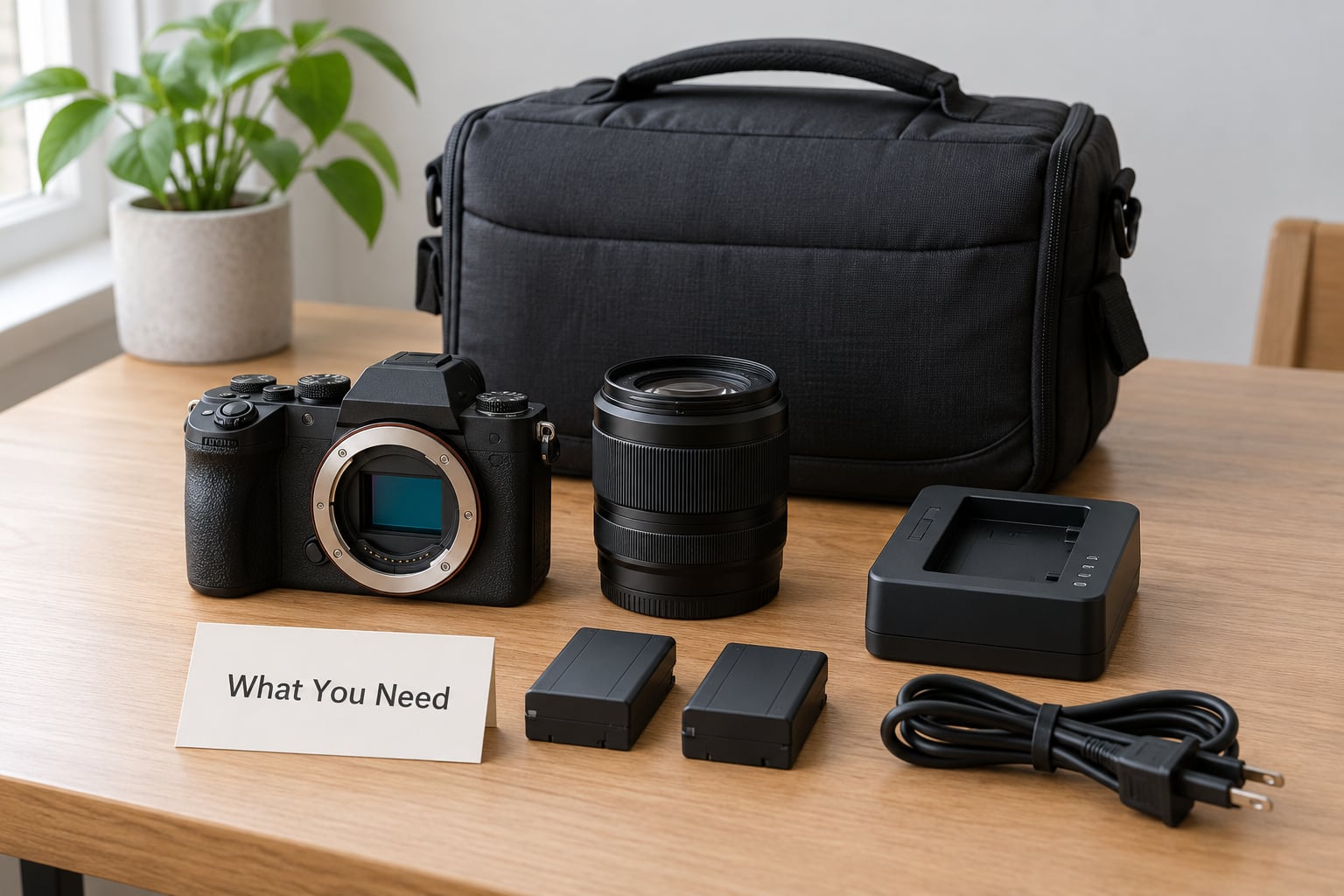
Renting well starts with what you have ready before you open a single rental house website. Bring four things to the process and the rest runs itself.
- A written gear list. Focal lengths, not adjectives. Write 16-35mm, a fast 85mm, one spare battery per body, a tripod with a ball head, a circular polarizer. A vague list is how people end up paying for a lens they never mount.
- Your shoot details. Shoot dates plus a day either side, the locations, the weather you expect, and whether you can hand gear to a friend while you fly. Airlines count lenses as carry-on only in small cases, which changes the whole calculation.
- Your actual camera mount. Canon RF, Sony E-mount, Nikon Z, Canon EF. Most rental houses label the mount clearly, but budget lenses get listed under the mount they adapt from. Confirm it in the item description rather than in the thumbnail.
- Insurance that already covers your shooting. Check your homeowner or renters policy and any equipment rider first. Some policies exclude gear used for paid work, and some rental houses require their own coverage option before they will accept a claim. Know which one applies before you book.
Add a credit card for the deposit and, if you are shooting for a client, a copy of the call sheet. Deposits are typically a pre-authorised hold rather than a charge, released after the gear comes back and passes inspection, but the amount and the release timing differ by company.
How to Rent Camera Gear Instead of Buying: Step by Step
Six steps, in order. The order matters more than people expect: the first three decide whether you should be renting at all, and the last two decide whether you pay for damage you did not cause.
Step 1: Define the gear and shoot you actually need
Turn the assignment into a list you could hand to a stranger. For a ten-day Iceland trip in October that might read: one full-frame body, a 16-35mm, a 24-70mm, spare batteries, a tripod head. Rent that list and nothing more.
Then check your existing kit against it honestly. The most common waste I see is renting a zoom to cover focal lengths already handled by something in the bag.
| Task or situation | Rent or buy | Why |
|---|---|---|
| One trip to a distant country | Rent | Baggage fees, handling risk and salt or dust exposure travel with the gear |
| A paid shoot you cannot repeat | Own the body | You cannot learn an unfamiliar menu on a wedding day |
| Telephoto for one sports or wildlife weekend | Rent | Heavy, expensive, and idle the other 50 weeks |
| Macro, tilt-shift or cinema glass for a project | Rent | Specialty items earn their keep a few times a year at most |
| Everyday body and a standard zoom | Buy | Daily reach, no rental friction, no learning curve |
| Studio strobes, stands and modifiers | Rent | Bulky to store and cheap to hire per session |
| Wireless audio and recorders | Depends | Buy if you shoot video weekly, rent for occasional shoots |
| A drone or a discontinued light | Rent | Certification, airframe risk, and some gear is no longer sold at all |
Owners of discontinued lighting on rental forums make the last row concrete: some fixtures simply cannot be bought new anymore, so hiring is the only route.
Step 2: Compare rental options and the full cost
Advertised day rates are the smallest part of the bill. Compare weekly rates against daily ones, deposits, damage waivers, delivery charges, expedited handling, taxes, upgrade fees and late-return penalties. Rental houses publish minimum terms such as a three-day weekend block or four-to-90-day ranges, and several do not show a rate at all until you pick dates.
Traditional rental houses run on published rate cards. Peer-to-peer platforms match you with someone else’s kit, which can be cheaper for odd items but gives you less predictable condition and support. Major names in the first group include BorrowLenses, Lensrentals, Pro Photo Rental, Adorama Rentals and Aperturent; the second group is led by ShareGrid and Kitsplit. A cinematographer I read advising on r/cinematography suggested checking destination-city prices before booking, since local hire firms sometimes undercut shipping your own kit.
The comparison that settles most arguments is break-even. Divide the purchase price by the rental rate and you get the number of rentals after which buying wins on pure arithmetic:
Rentals to break even = purchase price ÷ rental rate
| Item | Typical rate | Typical price when new | Rentals to break even |
|---|---|---|---|
| 70-200mm f/2.8 telephoto zoom | about 95 per week, delivery included | about 2500 | roughly 26 weeks |
| 50mm f/1.2 prime | about 79 for a seven-day block | about 2300 | roughly 29 rentals |
| 85mm f/1.4 prime | about 38 per day | about 1200 | roughly 32 days |
A commenter in the DPReview renting-versus-buying thread put it more bluntly: a weekend hire runs about five percent of a new body and about ten percent of a secondhand one, so a new body takes roughly twenty rentals to pay for itself. A poster on r/canon framed the same thing differently, renting a body and lens for 300 versus 1000 to buy, then asking whether they would shoot it more than about three times.
One real example sticks with me. A DPReview forum user rented a 15mm fisheye twice inside a month, noticed the purchase price was roughly ten times the hire charge, and adopted a personal ceiling of about 400: under that, buy; above it, keep renting. A ceiling you can re-run with your own numbers is worth more than any rule a blog hands you.
Watch the add-ons. Industry analysis of video hire puts surcharges for delivery, setup labour, insurance and cabling at 20 to 40 percent on top of the day rate, and photographers report the same pattern with insurance add-ons, expedited delivery and deposits. Several major services only deliver within the United States, with no Alaska, Hawaii or international coverage at all, which matters enormously for a destination shoot.
Step 3: Reserve the equipment in advance
Popular focal lengths go first, and hire stock is not held until payment clears. Treat lead time as the single biggest practical failure point: roughly two weeks is comfortable for ordinary dates, eight weeks is sensible for peak travel season, and a rush order 48 to 72 hours out is a gamble.
Before you pay, confirm five things in writing. Which exact items and which mount. The rental period and whether a minimum term applies. The cancellation window and the late fee per day. What the damage waiver excludes and what your deductible is. And what happens if something is unavailable on your dates, because a substitute body with different handling is not a substitute.
Local pickup and mail delivery trade places. Pickup saves the delivery fee and lets you inspect in person, which is a bigger deal than people expect. Mail is convenient but adds a round of shipping to both ends, and expedited options can erase the savings you were chasing.
One practical note from forum threads: account verification can take hours. Aperturent reportedly holds new accounts up to three business hours before ordering opens, so create yours the day before you plan to browse rates rather than the hour you need them.
Step 4: Inspect and document the gear before you leave
Do this at the counter, with the person who handed it to you, and photograph everything on your phone before it leaves your hands. Ten minutes here removes the most common source of arguments later.
- Serial numbers. Match the number on the body, the lens and the case against the packing list.
- Sensor check. Set the body to manual focus, f/16 or f/22, ISO 100, and shoot a plain bright wall. Zoom in to 100 percent and look for dust spots. Existing marks are the company’s problem to prove; undocumented ones are yours.
- Mount wobble. With the lens off, look straight into the mount and rotate slightly. Excess play means a damaged mount and it should be reported before the clock starts.
- Focus and stabilisation. Shoot text at both ends of the focal range, run stabilisation on and off, and confirm the autofocus acquires.
- Batteries. Count them and check each one charges. Cold drains packs fast, so ask for a second set per body rather than hoping.
- Cosmetic damage. Scratches, dents, haze, fungus, a filter thread worn smooth. Wide shots of each item plus a short video walkthrough of the case.
- Missing pieces. Hoods, caps, rear caps, pouches, cables, a lens support, a charger for the battery you actually brought.
Send those photos to yourself by email the same evening, so there is a timestamped copy outside the rental company’s system. It takes a minute and it settles arguments quickly.
Step 5: Use the gear inside its limits
Damage waivers are narrower than most people assume. Three different things get sold as protection: a damage waiver that reduces liability for accidental damage, accidental damage protection that covers more scenarios at a higher price, and theft coverage that often requires proof you did not leave the gear unattended. Negligence, leaving gear in a car, or taking it somewhere the contract forbids can void all of them.
Read your own policy too. Some homeowner plans exclude gear used for paid work, so a rental that damages while you are shooting a client may fall through both routes. Decide which policy is primary before you pick up.
On the handling side, keep the manual close. Change lenses over a table rather than over a shoulder, keep caps on and ports closed near sand or spray, do not swap a body mount onto a lens the agreement does not cover, and charge spare batteries between shoots rather than all at once. Keep a simple log of what you shot with each item and any knock it took, because that log is what you will want if a claim is ever needed.
Do not use the rented body as a test mule for settings you have never touched before an important job. Reserve unfamiliar gear for practice days, which is exactly the argument for renting before you buy.
Step 6: Return it on time and close the loop
Build the return into the schedule with a day of slack, because late fees accrue per day and the clock is usually not generous. Clean what the company asked you to clean, pack against the original foam, and photograph the packed case before sealing it.
Ask for written proof of return or a counter signature, and get the return date confirmation the same day. Check the deposit hold afterwards, since some companies release it within a few days and others take a full billing cycle.
If a shortage or damage is reported afterwards, respond the same day with your timestamped pickup and return photos. Companies sort these quickly when the paperwork is ready and slowly when it is not.
Common Mistakes When You Rent Camera Gear Instead of Buying
Almost every expensive rental story traces back to one of these. Each has a cheap fix.
- Renting the wrong category. The same week you rent a body, a fast prime and a flash, but never open the box of the flash. Fix: mark each item on your list with the shots it covers before you book.
- Looking only at the advertised rate. The day rate is not the invoice. Fix: add delivery, insurance, expedited handling, deposits and taxes to every quote before you compare.
- Skipping the insurance read. Discovering an exclusion at the counter costs more than the waiver did. Fix: read the exclusions, including negligence and unattended gear, before booking.
- Failing to document condition. Fix: the ten-minute pickup protocol above, with emailed photos.
- Learning an unfamiliar body on a one-off paid shoot. Nobody shoots a proposal or a wedding in a language they have not practised. Fix: rent unfamiliar gear for a rehearsal day first, or rent the brand you already use.
- Missing the return deadline. Fix: set a reminder for the day before, and treat the extra day in your schedule as insurance rather than lost time.
- Assuming availability. Fix: book weeks ahead in peak season and agree a fallback item in advance.
- Falling in love with the hire and buying it anyway. Rachel Carter Images rents a lens before buying nearly every time, and often decides not to buy because it does not suit her style, but she also notes that people frequently buy the lens within months anyway. Fix: decide in advance that a successful trial buys time, not a purchase. If you want a specific one, try the previous generation instead, since character is close and the price is lower.
Used gear is the third option and deserves real consideration. It sits between the two: cheaper than new, no rental friction, and you own the risk. The break-even moves in your favour, since secondhand pricing is roughly half of new for a body and lower for glass, so the rental count needed to justify buying falls sharply. What you take on instead is unknown shutter count, sensor condition, and servicing history, plus the real possibility of buying someone else’s problem.
| Option | Best when | Watch out for |
|---|---|---|
| Rent | Under about 20 uses of a given item | Learning curve, booking risk, surcharges, deposits |
| Buy new | Weekly use, warranty and servicing matter | Depreciation on the first sale, highest entry cost |
| Buy used | Regular use at the lowest sensible outlay | Unknown condition, no warranty, immediate wear at the front element |
A final trap worth naming: renting because you expect a project to grow, then buying the gear anyway. If the project is one line on a calendar, rent. If you can already name the six shoots you have lined up, buy and stop paying rental rates for something that is effectively already yours.
Frequently Asked Questions
Is renting camera equipment worth it?
It is worth it whenever you would use an item a handful of times a year rather than most weeks. Renting converts a large capital outlay into a small daily cost, lets you test expensive glass before committing, and shifts accidental damage onto the company that owns the gear. It stops being worth it when the gear belongs in your everyday bag, because then you are paying rental friction on every shoot.
Is it cheaper to rent or buy a camera lens?
Renting is cheaper for short or occasional use, buying is cheaper once you pass a break-even point you can calculate yourself. Divide the purchase price by the rental rate: a 70-200mm telephoto at roughly 95 per week against about 2500 new breaks even after about 26 weeks of hire. Below that line, rent. Above it, owning wins.
How does lens rental work?
You search a rental house or peer-to-peer platform by gear type and lens mount, check whether the item is free for your dates, choose insurance, and book. The gear comes to you or you collect it from a local counter, you shoot, and you return it by the agreed date and time. You pay for days of use plus surcharges, not for ownership, so a deposit or pre-authorisation is normally released after inspection.
Is it a good idea to buy used camera lenses?
Used glass is usually the sensible middle path between renting and buying new, because secondhand pricing is roughly half of new, which pulls the break-even point down sharply. Check the front element for haze or fungus, look for stiffness or oil on the barrel, confirm autofocus and stabilisation work, and confirm the lens mounts cleanly. Buy from a seller with a return window if you can.
What does camera rental insurance cover?
Three products get sold as protection. A damage waiver lowers your liability for accidental damage, accidental damage protection covers more situations at a higher price, and theft coverage usually requires proof the gear was not left unattended. Most policies exclude negligence, and your own homeowner or renters plan may exclude gear used for paid work. Read the exclusions, including unattended gear, before you book.
Can I rent out my camera gear?
Yes, and it is a separate market. Platforms such as ShareGrid and Kitsplit let owners list kit to other photographers, usually with an income share and an identity check. Expect vetting of your identity and equipment, insurance requirements, and wear from renters you will never meet. Owners set daily rates, so the math only works for equipment that would otherwise sit idle, not for a kit you use every week.
Conclusion
Rent what you will use a few times a year, what is heavy, and what is expensive to carry. Buy the kit you shoot with weekly, and buy used when the arithmetic says used still works for you. Start by writing the gear list in focal lengths, then divide the purchase price by the rental rate for every item on it. That single number decides most arguments before they begin.