To find models for a portfolio shoot, you write a short creative brief, decide what you can honestly offer in return, then approach a shortlist of people with a specific message and a signed model release. Most first portfolio shoots are Time for Print, or TFP, exchanges: the model gives you a few hours of posing and you give them usable edited images.
The word that stops most beginners is the word portfolio. They assume a portfolio has to be shot on a paid model before anyone will look at it. It doesn’t. Clients are checking whether you can direct a person, handle light, and deliver a finished edit, and a well-run TFP set answers all three.
It takes more time than people expect. I’d budget two to three weeks between your first message and the shoot itself, mostly waiting on replies. The actual shooting takes half a day.
Table of Contents
- What You Need
- Step-by-Step: How to Find Models for a Portfolio Shoot
- 1. Define the portfolio concept
- 2. Decide what you can offer
- 3. Build a list of suitable models
- 4. Write a specific outreach message
- 5. Hold a short conversation
- 6. Prepare the shoot and expectations
- 7. Confirm, shoot professionally, and follow up
- Common Mistakes
- Frequently Asked Questions
- Do I have to pay a model for a photography portfolio shoot?
- Should I ask an inexperienced friend to model for my portfolio?
- What information should I include when contacting a model?
- Do I need a model release for a portfolio photography shoot?
- How do I find models if I do not have a photography network yet?
- Conclusion: Start With One Clear Creative Brief
What You Need
Six things, and none of them require a lot of money.
A clear concept. One sentence describing the genre, the mood, and where the images will be used. A photographer who writes “moody editorial portraits, overcast daylight, for my portfolio” gets replies. One who writes “need a model” gets ignored.
A credible shortlist. Even five or ten names, chosen for how they match your concept, beats a list of fifty scrolled at random. Keeping notes on why each person fits is what stops the shoot drifting off concept later.
A professional contact method. A dedicated email address rather than a personal one, and a real message with a real subject line. Replies go to a person, not a business account with no name attached.
A realistic budget. Even unpaid shoots cost time, travel, food, and sometimes hair and makeup. Decide in advance which costs you will cover so the conversation never turns awkward halfway through.
A model release. A signed form giving you permission to use the images and stating how you will use them. I’ll cover what goes on it below, because skipping this is the single biggest mistake in this process.
A preparation checklist. Call sheet, clothing notes, shot list, parking, weather backup, and a named contact person. Ten minutes of writing prevents most of the day going wrong.
Step-by-Step: How to Find Models for a Portfolio Shoot
1. Define the portfolio concept
Turn the shoot into a brief you could hand to a stranger. Specify the genre, the mood, the wardrobe direction, the location, the lighting, the number of looks, who the images are for, and how the finished images will be used, even if the answer is “a portfolio” and “possibly a print on my wall”.
Set a number too. Twelve to fifteen usable images is plenty for a first portfolio; twenty-five to thirty is comfortable for an experienced photographer building a second or third set. Knowing the count keeps you from finishing with four frames you like out of two hundred.
How you’ll know it worked: you could hand the brief to someone who has never seen your portfolio and they would know what to bring, where to stand, and what the pictures are for.
2. Decide what you can offer
Be honest here, because models compare notes and a vague answer causes the misunderstandings that show up repeatedly on photography forums. Someone posts publicly asking to be shot in a particular outfit, then expects payment, because nobody established the deal beforehand.
Work out what you can genuinely cover: travel reimbursement, a meal, a hair and makeup artist you are booking, a small stipend, or nothing at all. Note which of those are flexible and which are firm. If you cannot pay anyone this month, say that plainly rather than leaving it implied.
Decide the image terms while you are thinking about money. How many edited images, delivered when, at what size, and whether the model gets full creative input on the retouch. A written answer to those four questions prevents nearly every dispute later.
How you’ll know it worked: you can state the deal in two sentences without hesitating, including the part where nobody gets paid.
3. Build a list of suitable models
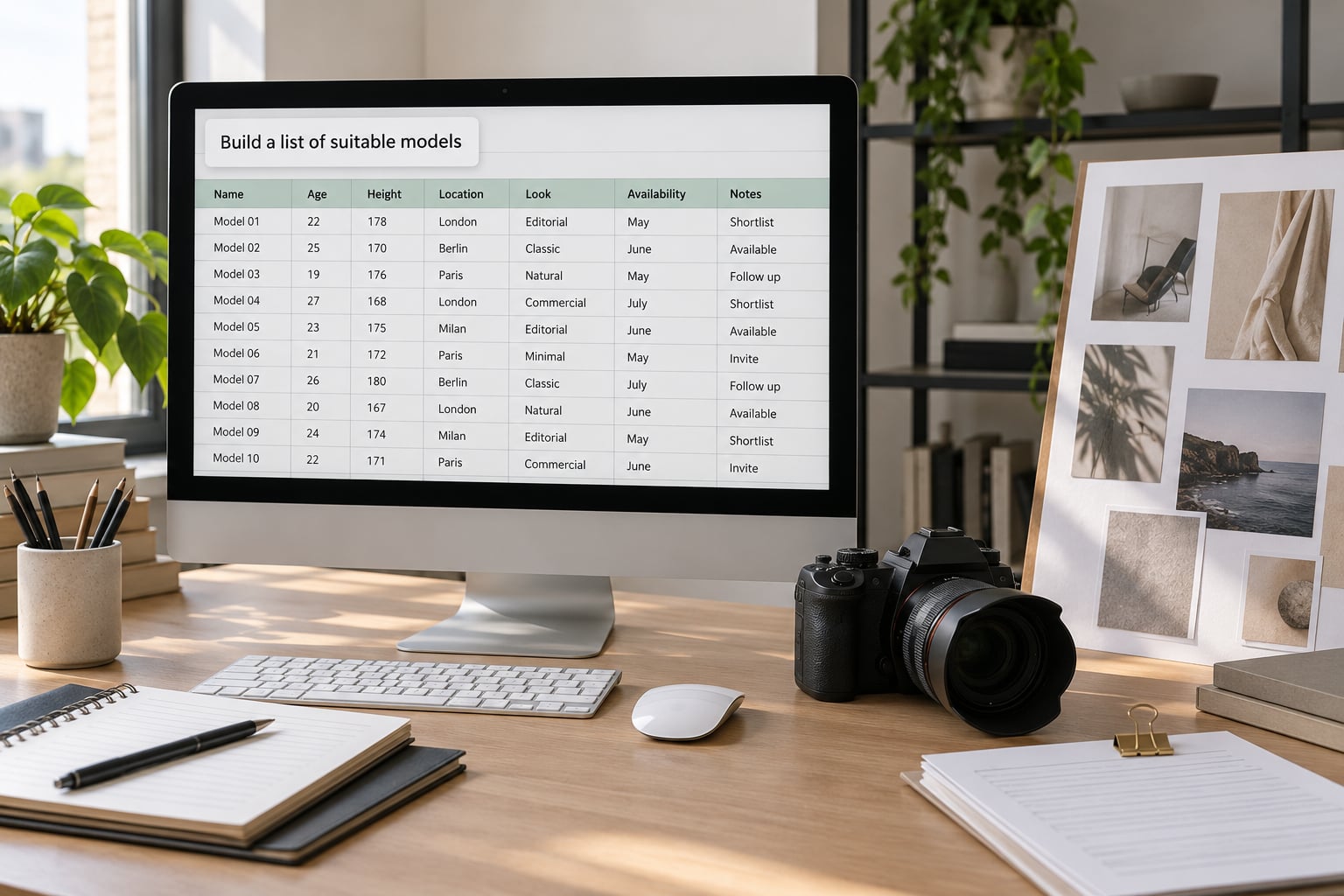
Start with the people you already half know, then widen. The channels that work most often, in rough order of reliability for a beginner:
- Friends, family, and friends of friends. The lowest-friction option, and the one most people start with. Be specific about what you’re asking and how long it will take.
- Local Facebook TFP groups and photography meetups. On r/photography, people repeatedly name local Facebook TFP groups as the channel that actually produces faces to shoot. Attend a meetup in person once, so your name is familiar before you message anyone.
- Instagram. Search by location and by styling terms, then look for people whose existing photos match your concept rather than whoever is most followed.
- Dedicated platforms. Purpleport is built for serious collaboration and rates far better on trust, while Model Mayhem is much larger and skewed heavily toward glamour work. Pick the one that matches the images you want to make.
- Modeling communities. r/MODELING and local Discord servers where people actively post availability.
- Local brands and small businesses. Browse a boutique, café, or skincare brand’s Instagram and see who has already modeled for them. Those people model in their free time and already understand the arrangement.
- Modeling agencies. The formal, paid route. Useful later, rarely the right starting point.
- Self-portraits and styled friends. Not a substitute for a real person who can hold a look, but they fill a gap while you build the rest.
When you shortlist, protect the concept. Age range, body type, and styling all change the set. A portfolio showing only one kind of face tells a client exactly what you can photograph, and not always the thing you want to say.
How you’ll know it worked: you have two or three people whose existing images already look like the brief, not just people who said yes.
4. Write a specific outreach message
The messages that get replies have five parts: who you are, what the project is, what you’re offering, what commitment is required, and how to reply. Here is a structure you can copy and adapt.
Hi Sam, I’m Jo, a portrait photographer based in Bristol. I’m building a moody outdoor portrait set for my portfolio, shot on an overcast afternoon in a park, roughly two hours, four looks, finished edits delivered within three weeks. It’s a TFP exchange, so no fee, and I’d send you fifteen edited images. I’m not able to pay a day rate at the moment, and I want to be upfront about that. Here’s a link to my work: [link]. If it sounds interesting, reply and I’ll send the full call sheet. If not, no problem at all.
Two details do most of the work. First, stating the money situation in the first message, because a model who learns there is no fee after agreeing is the person who stops replying. Second, sending a link even if your portfolio is thin, because models on r/MODELING say clearly that they check the photographer’s work before replying at all.
If your portfolio is genuinely empty, say what you do have: a small set, an ongoing project, or a link to a public album from a recent session. Ask them to judge the idea rather than the body count. If they want examples of a specific style and you have none, name the one thing you’re trying to prove and offer a short test session in that style instead of a full set.
How you’ll know it worked: replies mention the concept or the date, not just “interested”.
5. Hold a short conversation
Once someone replies, move to a call or a longer message rather than booking by text fragment. Ten minutes covers everything that matters: whether the concept suits them, their availability, their rate expectation, travel, usage rights, accessibility needs, their experience level, and how they prefer to communicate.
Ask directly about comfort with the concept. Someone confident in front of a camera and someone modelling for the first time need very different direction, and guessing wrong wastes the day. Ask about the wardrobe too; “whatever you’re comfortable in” is fine, but knowing it in advance avoids a wardrobe argument in a car park.
Discuss who else might be there. If it’s your first model, tell them that, and offer to let them bring a friend. Most people find that reassuring rather than odd.
How you’ll know it worked: both of you can describe the day, the location, and the commitment without any disagreement about the fee.
6. Prepare the shoot and expectations
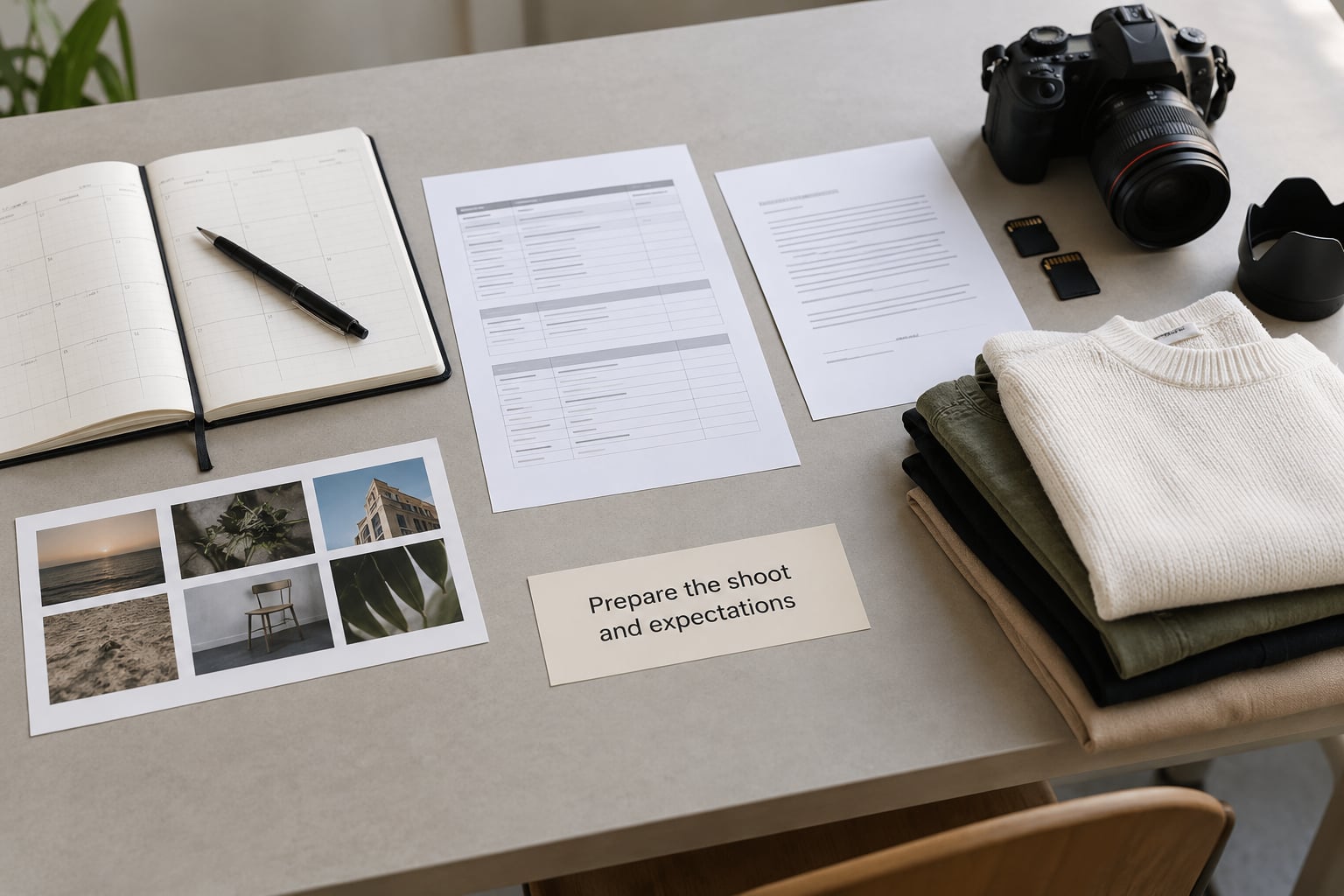
Write a one-page call sheet and send it to everyone involved a few days ahead. It should carry the date, start and expected finish times, exact location with parking, who to look for on arrival, clothing direction with a backup option, hair and makeup arrangements, reference images, breaks, image usage, compensation or the TFP terms, a contact person with a phone number, a weather or cancellation plan, and the release to sign on the day.
Discuss the release while everyone is calm. A model release is a signed statement giving you permission to use photographs of that person, describing what the images are and are not used for, and setting a term. Include the shoot date, the parties, the intended use, whether retouching is allowed, whether the model can withdraw consent and under what conditions, and a signature from each party. Anyone under 18 needs a parent or guardian to sign instead.
Then run the shot list. Ten looks or poses written down beats improvising for two hours, and it makes the difference between a set you can edit and a set you can’t.
How you’ll know it worked: the model arrives knowing the time, the place, the clothing, and the terms, so the first ten minutes of the shoot go straight to photography.
7. Confirm, shoot professionally, and follow up
Confirm the day before and the morning of, then stop texting. On set, agree breaks up front and keep them, tell the model before you adjust anything they are wearing or any pose that changes how they stand, and talk through what you want instead of going quiet behind the camera. Beginners often shoot silently because silence feels respectful; it isn’t, and models read it as indifference.
Afterwards, cull honestly, retouch, and deliver on the date you promised. Send the gallery, tag and credit the model, and ask two specific questions: would you model again, and would you introduce one other person you know? Follow-up like that is how a single TFP shoot becomes a network of five or ten faces, and it also surfaces retouch complaints early, while you can still fix them.
How you’ll know it worked: you get a reply to the referral ask, and the model sends their own work or brings a friend next time.
Common Mistakes
Sending a vague message. “Would you be interested in modelling?” with no concept, date, or terms gets a polite ignore. Fix it by adding one concrete idea and one clear offer.
Leaving the money question open. This is the most reported misunderstanding in TFP threads, and it damages reputations. Say whether it is paid, TFP, or something in between, in the first message.
Skipping the release. No signed release, no clean use of the images, and no defence if the model later asks you to take something down. Fix it with a one-page form signed on the day.
Casting for the wrong reason. Attractive does not mean right for the brief. Fix it by choosing on styling and comfort, and by putting a reference image in the first message.
Under-preparing the day. A model who travelled forty minutes and waited an hour in the cold will not do it twice. Fix it with a call sheet, a parking note, and a backup indoor location.
Going quiet after delivery. No credit, no tag, no thank-you, no follow-up. That is how you end up with no second model. Fix it with a delivery note and one referral question.
Two things protect both of you. Meet in a public place for anything involving a minor, and bring a chaperone or offer to let the model bring one. And ask permission before any physical adjustment, every time, without exception.
Frequently Asked Questions
Do I have to pay a model for a photography portfolio shoot?
No. Most first portfolio shoots run as Time for Print exchanges, where the model receives edited images in return for their time. Payment becomes worth considering when you need a specific look, a commercial usage licence, or a face that fits a branding direction. Be explicit either way, in writing, before the day.
Should I ask an inexperienced friend to model for my portfolio?
Yes, especially for your first set, and with a caveat. An inexperienced friend will need more direction, which is useful practice. Choose someone comfortable being photographed and clear about the time commitment, and shoot something simple so you are not both learning at once. Consider paying someone outside your circle for your second set.
What information should I include when contacting a model?
Include who you are and where you are based, the concept in one line, the date, location and expected length, what you are offering, and what the arrangement is financially. Say clearly whether it is Time for Print or paid, link to a sample of your work, and give a straightforward way to reply. Vagueness is what gets messages ignored.
Do I need a model release for a portfolio photography shoot?
Yes, even when nothing is being paid and nothing is being sold. A release records the shoot date, who was photographed, the intended use of the images, whether retouching is permitted, and both signatures. Anyone under 18 needs a parent or guardian to sign. It protects both of you and takes a couple of minutes.
How do I find models if I do not have a photography network yet?
Start with local Facebook TFP groups and in-person meetups, which turn into names faster than any app. Then use Instagram location searches, platforms like Purpleport, and local brands whose posts show who has already modelled for them. Bring something to show even if it is a small ongoing set, and expect your first two or three models to come from people you already know.
Conclusion: Start With One Clear Creative Brief
Finding models for a portfolio shoot comes down to four things: a concept specific enough to picture, an honest answer about money, a shortlist of people who already fit, and a written agreement covering images and a signed release. Everything else is logistics.
Start today by writing one paragraph of concept, deciding what you can offer, and sending three messages to people you have some connection to. Send more once you see replies come back.