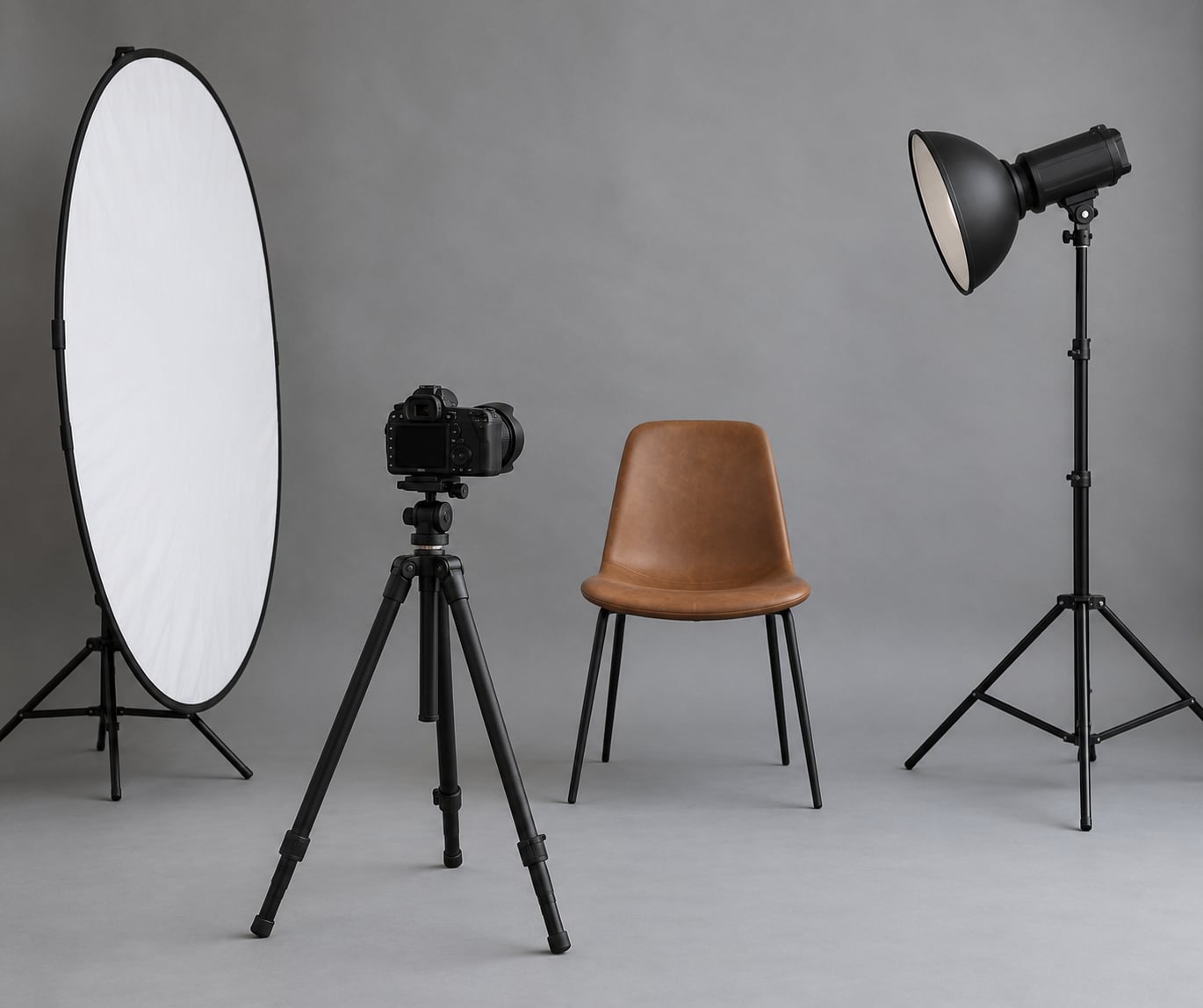
Neither one wins outright, and that is the honest answer to the reflector vs fill flash question. A reflector bounces light you already have, so it stays free, silent and colour-accurate, but it only works when there is enough light to bounce and when someone can hold it. Fill flash makes its own light, so it reaches further and stays repeatable, but it costs money, steals shutter speed and needs colour matching.
Most portrait photographers end up owning both. The trick is knowing which one the situation in front of you actually calls for, and in this guide for 2026 I break down how each method handles shadows, reach, setup time and changing weather so you can pick without buying the wrong tool first.
Table of Contents
Reflector vs Fill Flash at a Glance
The table below covers the nine things that actually change your decision. Read the bottom row first; it is the one that settles most arguments.
| Factor | Reflector | Fill Flash |
|---|---|---|
| Shadow reduction | Works only where ambient light is strong enough to bounce | Works anywhere, in shade or full sun |
| Light quality | Very broad and soft, edges barely visible | Directional unless diffused or bounced, controllable width |
| Effective range | A few feet from the subject, ideally within 10 | Room to 40 feet depending on output and aperture |
| Exposure consistency | Tracks the light, so it drifts as clouds move | Fixed output you set once and repeat |
| Setup time | About 10 seconds, plus finding the angle | 2 to 5 minutes with a stand, triggers and a test shot |
| Portability | One hand-carry bag, light, no batteries | Bodies, batteries, triggers and a stand |
| Relative expense | Entry level, minimal extra gear needed | Flash body, batteries, trigger and diffuser add up fast |
| Colour accuracy | Always matches the scene, no gels required | Around 5500K, needs gels in warm light |
| Best environments | Golden hour, open shade, overcast, bounced walls | Harsh midday sun, backlight, large venues, night work |
| Who wins when | You are solo, the light is soft, and the shot needs a natural look | You need guaranteed exposure, reach, or shots fast |
How Reflectors and Fill Flash Fill Shadows
A reflector is a passive surface, usually collapsible fabric in white, silver, gold, black or translucent, that redirects existing sunlight or skylight back at your subject. It has no power source, so everything it delivers is borrowed from the environment.
Fill flash is an active light source, normally a speedlight or hot shoe flash, fired at reduced power so it lifts shadow areas without becoming the brightest thing in the frame. It creates light rather than redirecting it, which is why its behaviour is so different in practice.
Direction is the first real split. A reflector only works from the same general side as the main light, because you are sending that light back along its own path. Aim it at the shadow side from an angle the sun cannot reach and it does almost nothing. Fill flash comes from wherever you put it, including well below or beside the subject.
Colour temperature is the second. A white reflector returns light that is already the colour of the scene, so a sunset stays a sunset. A flash fires near 5500K, which is daylight white, so against a golden-hour background it reads as too blue unless you dial the white balance or add a warming gel.
Contrast follows from both. A reflector lifts shadows closer to the tone of the light, softening the subject-to-background contrast in a natural way. Flash can hold shadows down at a precise level, so you decide how much separation survives.
Reflector vs Fill Flash: Light Quality Differences
A 32-inch reflector is a broad source by definition, which means shadow edges fall off gently and skin texture stays forgiving. Round and parabolic designs concentrate the light into a narrower beam with a more obvious hot centre, and curved or U-shaped panels wrap the subject enough to produce a catchlight shaped like the panel itself.
Flash light is small by comparison, so an unmodified speedlight gives you hard, sharply defined shadow edges. Add a diffusion sock or shoot through a large softbox and the shadow quality starts to approach a reflector, at the cost of several stops of output and a much larger kit.
Flash also freezes motion. A reflector only reflects what the ambient light already froze, so a walking subject in bright sun stays sharp only because the sun froze them. Flash puts out a burst of roughly 1/1000s, which stops movement the ambient light never could. For a jumping or spinning subject in open shade, that alone can win the frame.
Power, Reach, and Exposure Control
This is where the reflector vs fill flash decision really gets decided. A reflector has no reach of its own; its brightness drops fast as you back away from the subject because the reflected light spreads. Past about 10 feet, most reflectors contribute so little that you are wasting your time.
Flash falls off by the inverse square law too, but from a much higher starting point. Doubling the distance quarters the light on the subject, which sounds harsh until you realise you started with enough to spare. That headroom is what lets one flash serve a family group, a full wedding party and a venue with no windows.
The catch with flash is your camera’s shutter sync speed, usually around 1/200s on a DSLR. Above it you need high-speed sync, which costs roughly two to three stops of effective power and can trigger banding on some bodies. Mirrorless cameras with electronic shutters remove the ceiling, so a speedlight can fire at 1/1000s and still light the subject properly, which is a genuine advantage the older arguments never mention.
Start your fill flash power at about -1.7 EV relative to a normal flash exposure, then adjust. That single number, carried over from the film era and still used by working photographers, gets you close before you change anything else.
Exposure control also means lighting ratios. A reflector moved to the shadow side typically gives you a ratio around 1:2. A reflector close to the subject can reach 1:4 or harsher, which is why beginners hold it too near. A diffused flash at -2 EV and about 45 degrees from the axis reliably lands near 1:3.
Before either technique, meter the scene. Spot meter the background, then expose for it and let the fill do what it does. Beginners who meter the lit side of a face end up with a grey subject and no separation.
Setup, Workflow, Portability, and Cost
Setup speed matters more than beginners expect. Unfolding a reflector, having your subject hold it or clipping it to a stand takes seconds, and you can reposition between every frame. Setting up an off-camera flash means mounting the body, cabling the trigger, dialling power, aiming, and taking a test shot.
Assistants change this entirely. With a second pair of hands, a reflector becomes far more capable, because the angle can be adjusted continuously while you shoot. Working alone, a reflector is either hand-held by the subject or trapped on a stand, and the stand option is awkward on uneven ground.
Portability favours the reflector without much argument. One folded disc in a bag, nothing to recharge, nothing to fail in the rain. A flash kit multiplies: body, spare batteries, trigger, stand, sandbags for wind, and a diffuser for softer output.
Expense follows the same line. A basic reflector is the cheapest meaningful lighting upgrade you can buy, and the accessories it needs are minimal. Flash gear costs several times more once you count batteries and a trigger, and a second flash for a proper two-light setup raises it again.
Weather is worth mentioning because it comes up constantly on photography forums. A large reflector is basically a sail, and a gust that flips it mid-session wastes more time than any gear choice. Photographers on r/photography repeatedly name wind as the practical limit of reflectors outdoors. Water, on the other hand, favours flash only slightly, since gear covers matter more than the light source.
Which Should You Choose?
Choose a reflector when the light is soft and directional. Golden hour, open shade, an overcast day, or any scene with a bright wall, pale ground or water nearby. It is also the right call for tight budgets, travel shooters, and anyone who wants the natural, unprocessed look clients often ask for. In open shade, look for a natural reflector first; a cream wall costs nothing and works surprisingly well.
Choose fill flash when the light is harsh or missing. Midday sun, backlit subjects, deep shade, an evening venue or a room with no windows. It is the only option that gives you repeatable exposure across a two-hour wedding ceremony, and it is the practical answer for a solo shooter who cannot hold a reflector and shoot at the same time.
For small groups, flash scales far better. A family of eight on a beach puts everyone within a few feet of each other, so one diffused speedlight at -1.7 EV covers the whole group while a reflector leaves the outer people too dark.
For fast-moving subjects, flash wins again. Between its frozen flash duration and the fact that the subject cannot trip over your gear, it is the safer choice for engagement sessions, pets and children.
For the hardest case, changing light, use flash. A reflector output swings with passing cloud, and mixed readings mid-shoot are the most common complaint beginners have about it. Flash output does not move.
And for the best results, combine them. Use the reflector as your fill and the flash purely for a hair of separation or a catchlight in the eyes. That hybrid keeps the natural look while fixing the flatness.
Frequently Asked Questions
Is a reflector better than fill flash for portraits?
It depends on the light you already have. A reflector gives a softer, more natural result and is cheaper, but it only works in bright, soft, directional light and often needs a second pair of hands. Fill flash works in any condition, keeps exposure consistent through changing light, and freezes motion, but costs more, needs setup time and needs colour correction in warm light.
How much flash power should I use as fill?
Start around -1.7 EV relative to a normal flash exposure, then fine-tune with a test shot. Place a diffuser on the flash and angle it about 45 degrees from the camera axis. Overcast or shaded scenes usually need less fill, while harsh midday sun needs more to visibly open the shadows.
Will a reflector work in low light?
Only if the light is directional. A reflector returns existing light, so in open shade or indoors at night there is nothing strong to bounce and the effect disappears. In low light it can still help gently when a window, doorway or lamp sits opposite or beside your subject, but beyond that you need flash or another source.
Should I use fill flash directly from the camera?
Only for quick snapshots and indoor events. On-camera fill lands right on the lens axis, so it flattens the face, kills shadow depth and puts a hot spot on the forehead. Turn the head to bounce it off a ceiling, or move it off-axis with a small stand for anything you want to keep.
Can I combine a reflector with fill flash?
Yes, and many professionals do. The reflector handles the main fill on the shadow side, and the flash adds a small amount of separation or a catchlight in the eyes. Set the flash to a low output, around -2 EV or lower, or keep the flash purely for the eyes so the natural softness of the reflector still carries the frame.
Conclusion
Start with a reflector if you are on a budget, shooting outdoors in soft directional light, and want the free natural look. Buy fill flash first if you shoot paid work where exposure has to hold for hours, if you face harsh sun or backlight, or if you work alone and need reach.
Whichever comes first, learn it properly rather than guessing. Manual flash power, a spot meter and the -1.7 starting value will carry you further than any piece of gear, and knowing when each tool runs out of light is the actual skill behind this whole comparison.